
Richard
Author
Share this article
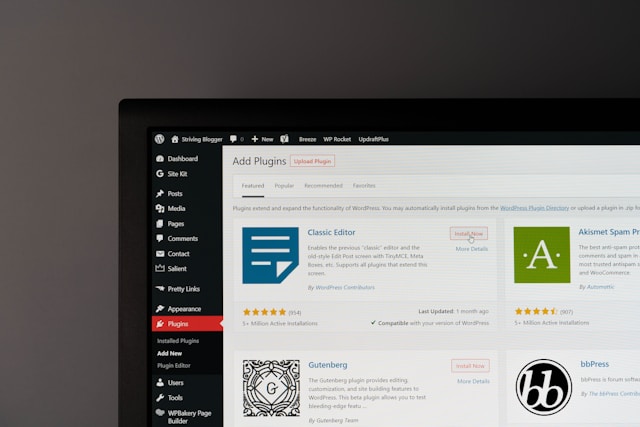
WordPress is one of the most popular platforms for building websites. It is flexible, powerful, and supported by a massive ecosystem of themes and plugins.
But building a directory website with WordPress is a different challenge.
A directory needs more than pages and blog posts. You need structured listings, categories, search, filters, listing pages, submissions, SEO, custom fields, and often a way to monetize the businesses, products, or services listed on your website.
With WordPress, these capabilities often require a combination of themes, directory plugins, extensions, payment plugins, hosting, and ongoing maintenance.
For someone who simply wants to launch a directory and start growing it, that can create unnecessary complexity.
This is where specialized WordPress alternatives for building directory websites become interesting.
Instead of turning a general-purpose CMS into a directory platform, you can start with a platform specifically designed around structured listings and directory websites.
One of those platforms is Row.so.
What Makes a Good WordPress Alternative for a Directory Website?
The best WordPress alternative depends on what you are trying to build.
If your goal is to create a traditional content website, WordPress may still be an excellent choice.
But if your goal is to launch a directory business, you should look for a platform that makes the following things simple:
Structured listings: Every business, product, tool, job, or resource should have its own structured data.
Categories and filters: Visitors should be able to quickly discover relevant listings.
Search: A directory needs a fast and useful way to find information.
SEO: Category pages and individual listing pages should be optimized for search engines.
Custom domains: Your directory should look like a real standalone business rather than a page hosted on another platform.
Flexible templates: Different directory ideas require different layouts and experiences.
Data management: Managing hundreds or thousands of listings should not become painful.
Monetization: You should be able to turn traffic and listings into revenue.
Low maintenance: You should spend your time growing the directory rather than constantly maintaining plugins.
These are the areas where a specialized directory builder can have a significant advantage over a general-purpose CMS.
Row.so as a WordPress Alternative for Directory Websites
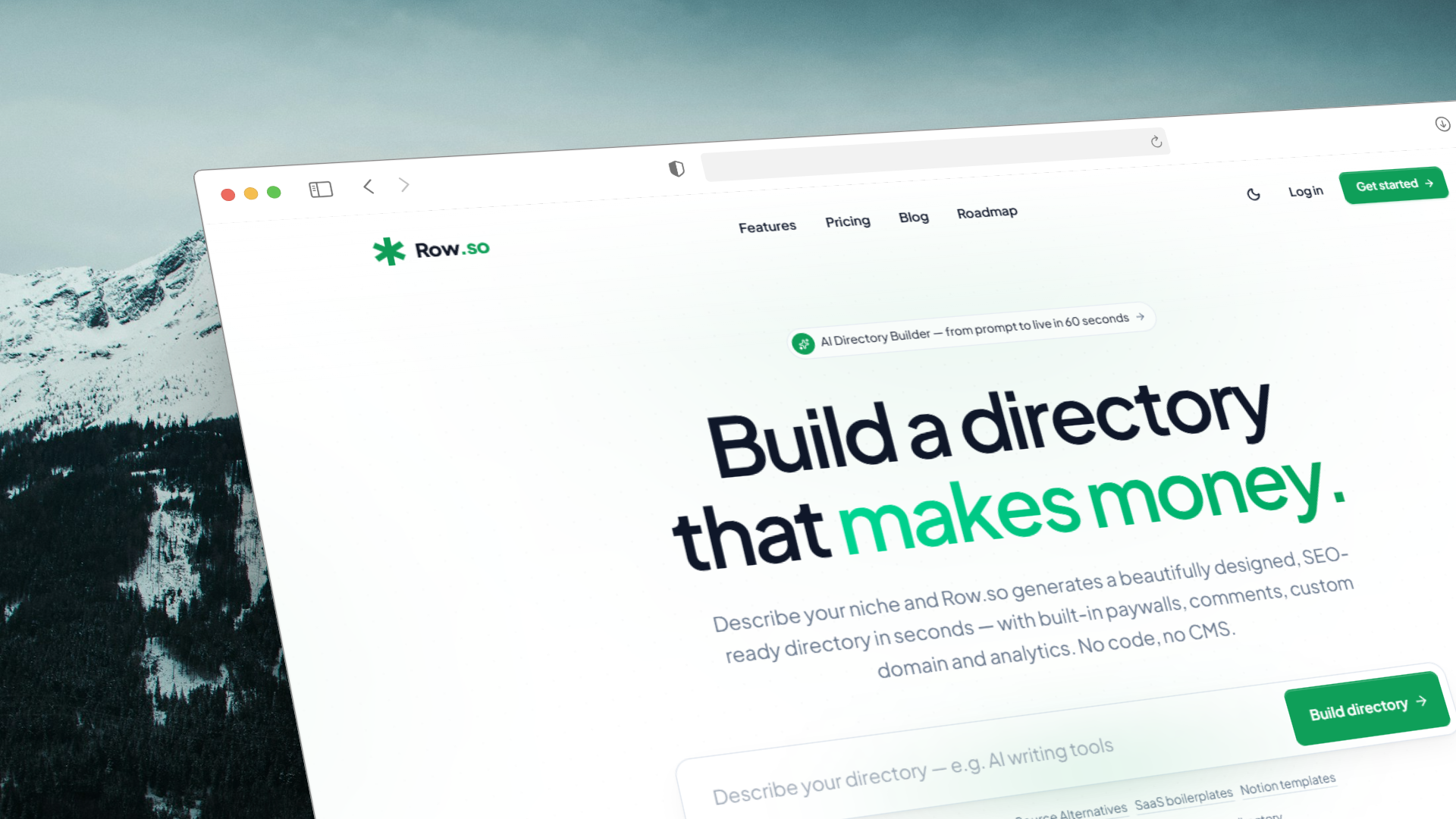
Row.so is a no-code platform built specifically for creating directory websites.
Instead of starting with a blank WordPress installation and assembling multiple plugins, you start with the directory itself.
You can choose a template, define your listing structure, add your data, customize the design, connect your domain, and publish.
This makes Row.so particularly useful for indie makers, entrepreneurs, marketers, communities, and businesses that want to launch a directory without spending weeks building the underlying infrastructure.
The platform can also use AI to help generate directory data, making it possible to go from a simple idea to an initial directory much faster.
For example, you could start with:
AI Tools Directory
SaaS Alternatives Directory
Startup Directory
Remote Jobs Directory
Marketing Agencies Directory
Local Business Directory
Design Resources Directory
Product Directory
The underlying idea is the same: turn structured information into a useful, searchable website.
Build Different Types of Directory Websites With Multiple Templates
One of the biggest limitations of using a generic website builder is that you often have to adapt your idea to the platform.
A directory builder should work the other way around.
Your platform should adapt to your directory.
Row.so provides different templates and layouts that can be used for different types of directories.
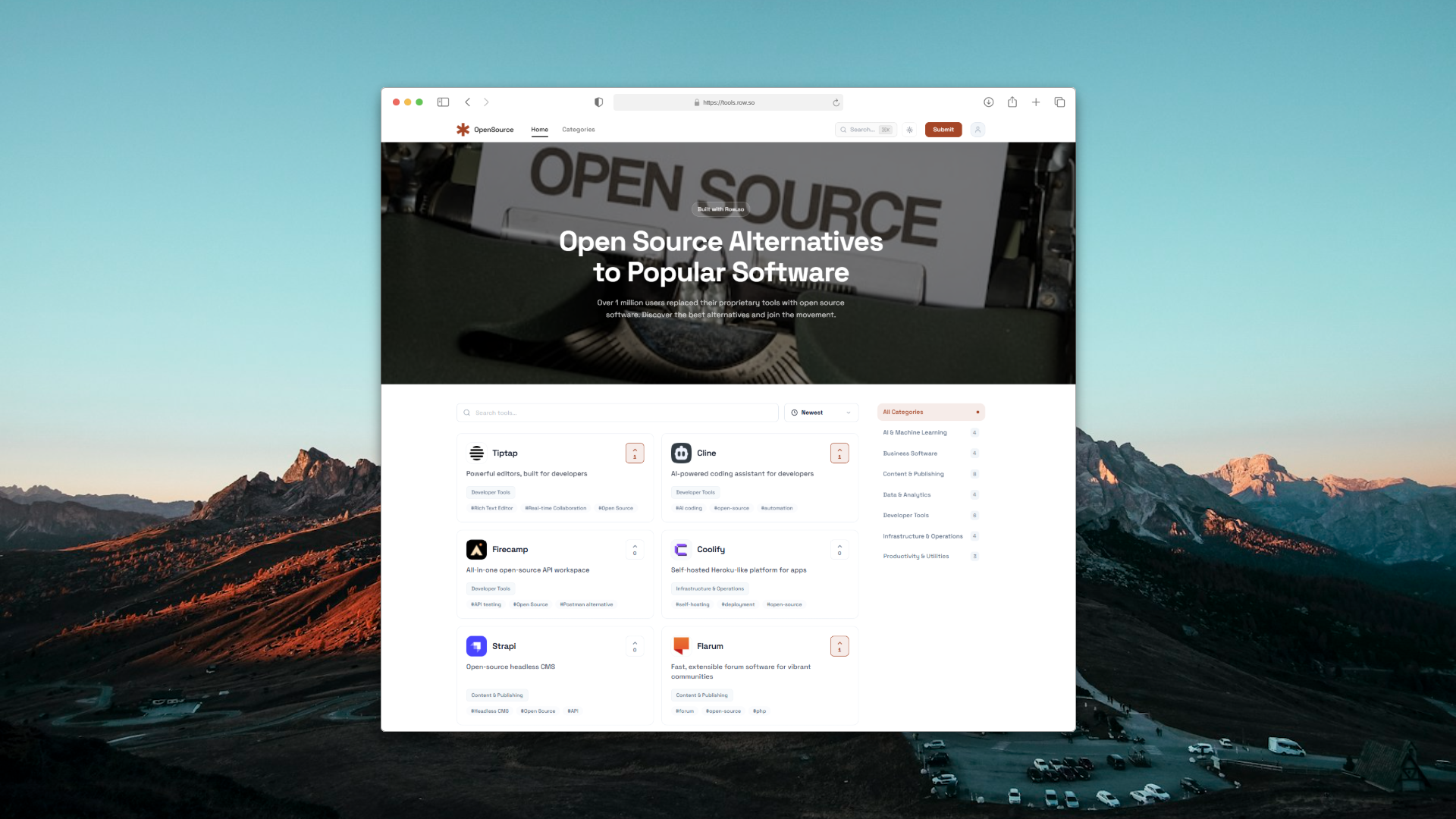
AI Tools Directory
AI directories have become one of the most popular directory concepts.
You can organize tools into categories such as AI writing, AI image generation, AI video, AI coding, AI marketing, and AI productivity.
Each tool can have its own listing page containing its name, description, website, category, pricing information, screenshots, and other custom fields.
This creates a structured resource that is much more useful than a simple list of links.
SaaS Alternatives Directory
A SaaS alternatives directory is another strong use case.
You could build pages around searches such as:
Notion alternatives
WordPress alternatives
Webflow alternatives
Canva alternatives
Slack alternatives
Shopify alternatives
Each software product can become a listing, while categories and alternative pages can target specific search intent.
This makes directories particularly interesting for SEO-driven businesses.
Startup Directory
A startup directory can organize companies by industry, location, funding stage, business model, or other attributes.
Each startup could have its own profile with a company description, website, founders, social links, category, and additional information.
This model can work especially well for startup communities, publications, investors, and niche technology websites.
Local Business Directory
Local directories can help users discover businesses and services in a particular city or region.
Examples include restaurants, cafes, hotels, coworking spaces, agencies, gyms, and professional services.
For these use cases, a map-based experience can make a directory significantly more useful.
Instead of simply displaying a list, visitors can explore businesses geographically and narrow the results using categories and filters.
Job Board
A job board is essentially a specialized type of directory.
You can create directories focused on remote jobs, developer jobs, AI jobs, startup jobs, freelance opportunities, or any other niche.
The advantage of focusing on a specific niche is that you can build a much more targeted audience than with a generic job website.
Why Templates Matter When Choosing a WordPress Alternative
Templates are more than visual designs.
For directory websites, the template determines how users discover information.
A good directory experience should make it easy for visitors to:
Find what they need
Understand each listing
Filter irrelevant results
Explore categories
Compare options
Visit individual listing pages
Discover related listings
This is why choosing a platform with multiple directory templates can be more valuable than choosing a general website builder with hundreds of unrelated website themes.
The template should reflect the way people actually use your directory.
A local business directory might need maps.
An AI tools directory might need categories and filters.
A startup directory might prioritize company profiles.
A job board might prioritize location, job type, and salary.
The underlying platform should be flexible enough to support all of these use cases.
Manage Directory Data With Google Sheets
One of the practical challenges of building a large directory is managing the data.
If you have 20 listings, almost any system will work.
If you have 500 or 5,000 listings, content management becomes much more important.
Row.so integrates with Google Sheets, allowing you to use a spreadsheet as part of your directory management workflow.
This can be especially useful for creators who already use Google Sheets to collect, organize, and update structured information.
You can manage listing data in a familiar spreadsheet environment while Row.so turns that information into a public directory website.
For directory projects with a large amount of structured data, this workflow can be significantly easier than manually editing individual pages in a traditional CMS.
SEO for Directory Websites
SEO is one of the biggest reasons people build directories.
A successful directory can potentially rank for thousands of highly specific searches because every category, topic, and listing represents an opportunity to create useful content.
For example, an AI tools directory could target searches such as:
Best AI writing tools
Best AI video generators
AI tools for developers
AI tools for marketers
AI productivity tools
The same principle applies to other niches.
A travel directory could target destinations.
A business directory could target locations and services.
A startup directory could target industries and companies.
A job directory could target job types and locations.
The key is that the directory should provide genuine value rather than simply generating thousands of thin pages.
A strong directory combines structured data with useful descriptions, clear categorization, good internal linking, fast performance, and a useful user experience.
That is where a purpose-built platform can make the technical side of directory SEO much easier.
Monetize Your Directory Website
A directory can also become a business.
Once your website has an audience, there are several ways to monetize it.
Paid Listings
Allow businesses, startups, products, or creators to submit listings for a fee.
Featured Listings
Charge for additional visibility by placing selected listings in featured positions.
Sponsored Listings
Companies can pay to reach your audience through sponsored placements.
Affiliate Revenue
Add affiliate links to relevant products and services.
Paid Access
Create premium directories where users pay to access advanced information or a curated database.
Advertising
Once the directory attracts enough traffic, advertising can become another potential revenue stream.
This is one of the reasons directory websites are attractive to indie makers.
You are not necessarily building a website simply to generate traffic.
You are building an asset that can potentially generate recurring revenue.
WordPress vs. a Specialized Directory Builder
The biggest difference is the starting point.
WordPress starts as a general-purpose content management system.
You then add the functionality required to turn it into a directory.
A specialized platform starts with the assumption that you are building a directory.
That changes the entire workflow.
With WordPress, you may spend considerable time researching themes, plugins, compatibility, hosting, security, updates, and integrations.
With Row.so, the primary workflow is much closer to:
Choose your idea → choose a template → add your listings → customize → connect your domain → publish.
For developers who want complete control over every part of their infrastructure, WordPress can still be the better option.
For creators who want to build and launch a directory website quickly, a specialized platform can be a much simpler approach.
When Should You Choose Row.so Instead of WordPress?
Row.so can be a strong WordPress alternative if you want to:
Build a directory without coding
Launch quickly
Use different directory templates
Manage structured listing data
Use Google Sheets for content management
Create SEO-friendly directory pages
Add search and filters
Connect a custom domain
Accept paid submissions
Monetize listings
Build a directory business rather than maintain a CMS
It is particularly well suited to niche directories where the data itself is the core product.
Final Thoughts
WordPress is a powerful platform, but it was not originally designed specifically for directory businesses.
If you are searching for WordPress alternatives for building a directory website, it is worth considering a platform built around the directory use case from the beginning.
Row.so gives you a simpler way to turn structured data into a professional directory website.
With multiple templates, AI-assisted data generation, Google Sheets integration, custom domains, search and filters, SEO features, and monetization options, you can focus less on configuring a website and more on building something people actually want to use.
Whether you are building an AI tools directory, SaaS alternatives website, startup directory, local business directory, job board, or another niche database, the goal is the same:
Build the directory, grow the audience, and turn your data into a business.